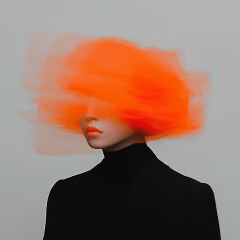
What makes an image credible?
In collaboration with the Swiss National Library as part of the "Swiss Press Photo 26" exhibition

In collaboration with the Swiss National Library as part of the "Swiss Press Photo 26" exhibition

A picture can your life
Change even if
it never existed.
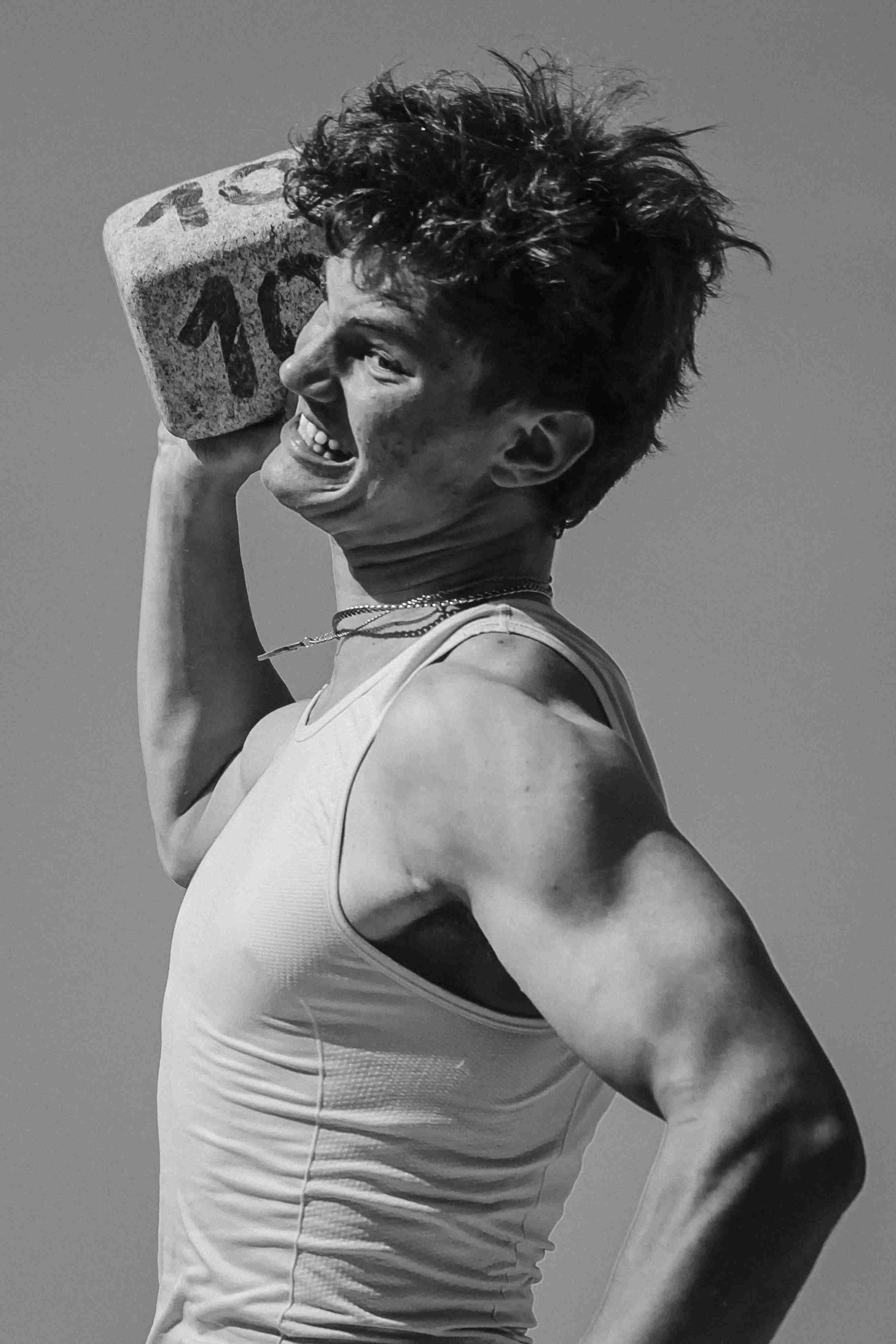
Images have an immediate impact. We see a scene and quickly feel that we already understand what is happening. But an image always shows only a fragment.
Even a press photograph does not derive its documentary value solely from being captured with a camera. What is decisive is whether its authenticity can be verified:
Who took the picture?
When and where was it taken?
In what context was it published?
Is there a caption and other sources?
Has it been edited?
Can the event be independently confirmed?
Without this context, even a real photo can be misclassified, reinterpreted, or used for a fabricated story.

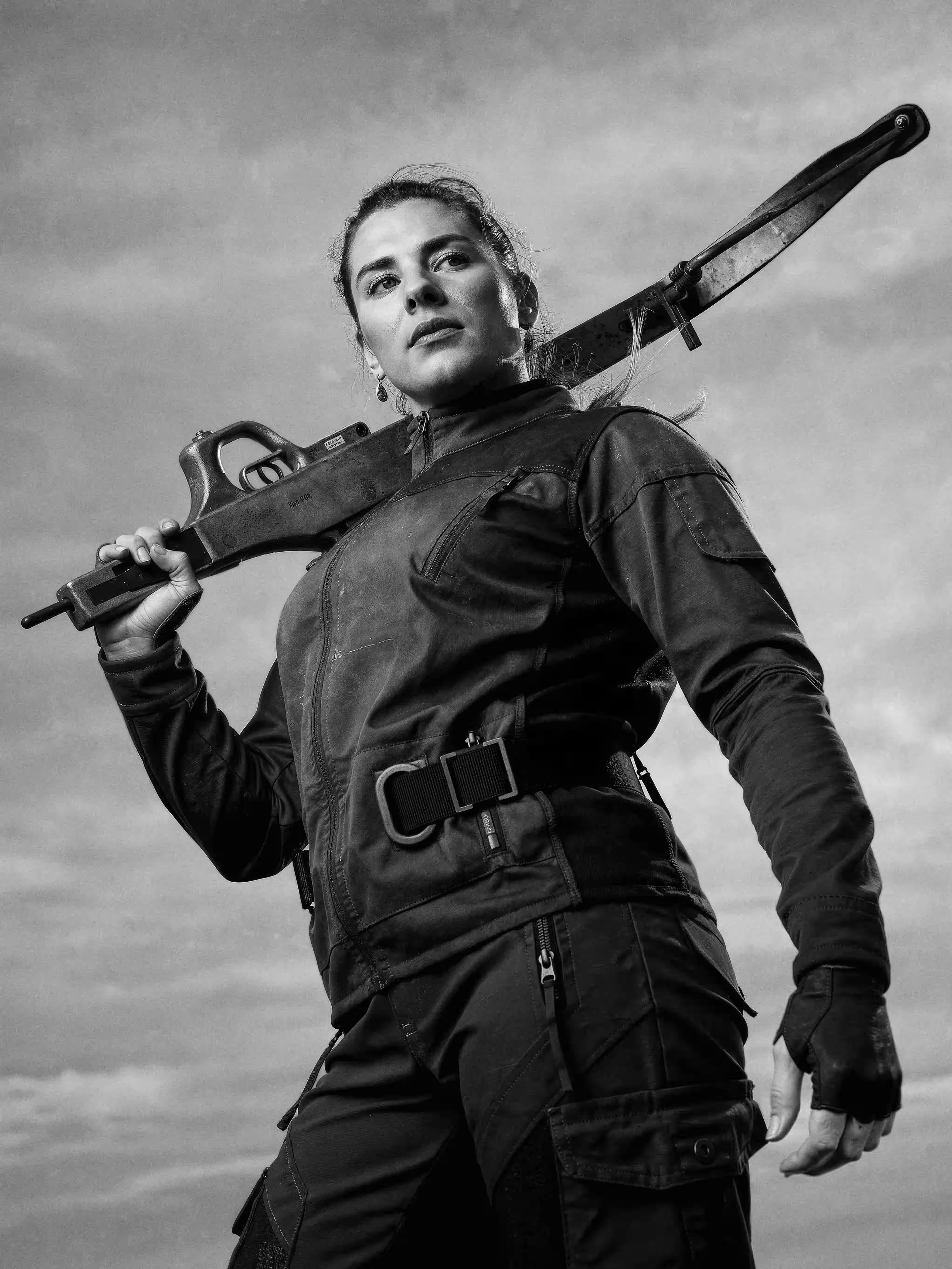
Familiar symbols are quickly categorized. The crossbow immediately gives the image a story.

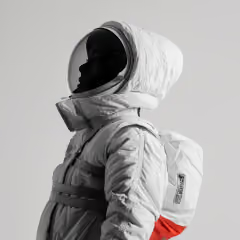
Black and white, perspective, lighting, and pose are reminiscent of documentary photography. The style lends credibility to the fabricated scene.

A powerful image triggers a reaction within seconds. The question of origin and context often comes later.

When similar images and narratives appear repeatedly, they can seem more credible, even if we don't know their original source.
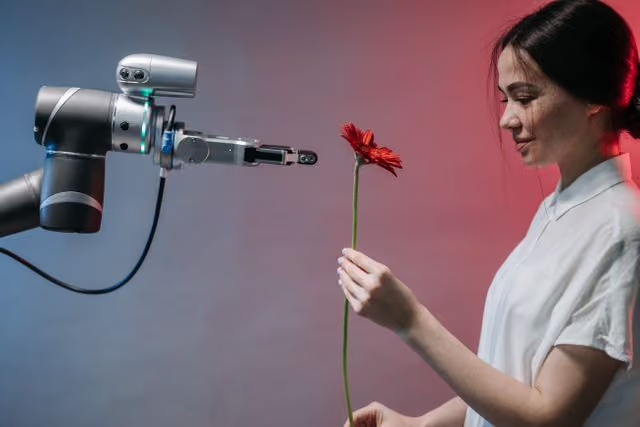
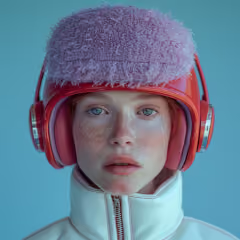
People have limited reliability in identifying AI images
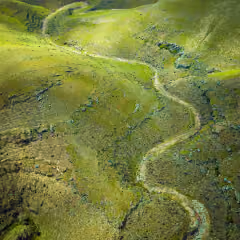
In an experiment with more than 12,500 people and around 287,000 image evaluations, real and AI-generated images were correctly distinguished only 62 percent of the time on average. Judging nature and city shots proved particularly difficult.
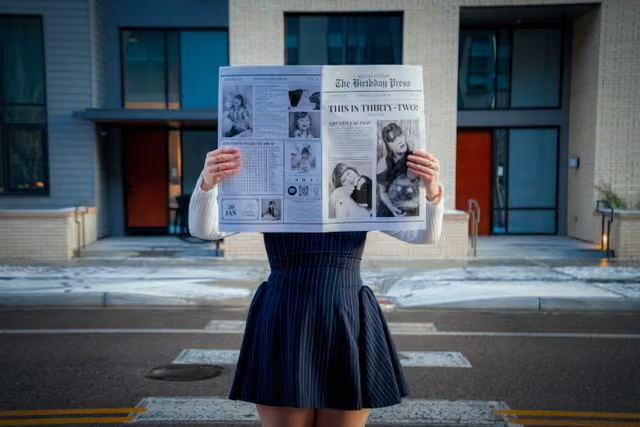
Swiss Press Photo showcases documented contemporary history
The exhibition "Swiss Press Photo 26" will present the best Swiss press photographs of 2025 at the Swiss National Library from July 16 to October 9, 2026. The photographs are not just displayed; they are linked to their creators, captions, and journalistic contexts. This allows them to be categorized, verified, and read later as testimonies of their time.
Free access to knowledge is not a given
In 2025, the American Library Association documented 4,235 different book titles in the US for which removal or restricted access was demanded. 92 percent of the challenges came from organized interest groups, government officials, or political decision-makers. This puts pressure not only on individual books but also on libraries as places where diverse stories, perspectives, and sources remain accessible.
Realistic AI images can make false claims more credibleArchival images from Aargau are historically verifiable
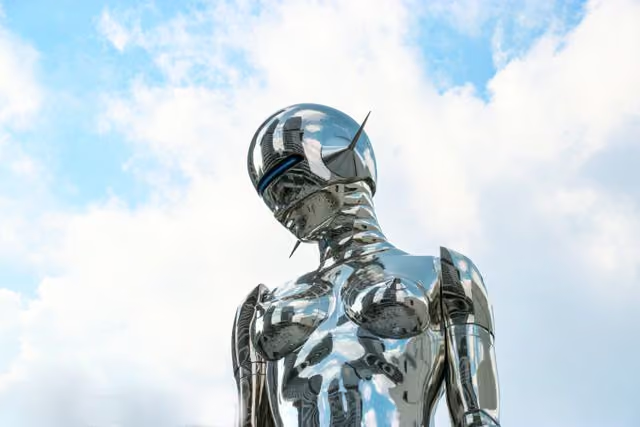
A study on the impact of AI-generated images showed that people are more susceptible to misinformation when realistic-looking synthetic images appear to provide strong evidence for the accompanying claim.
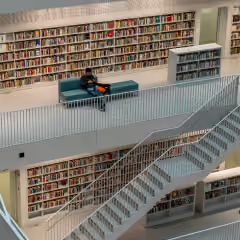
Libraries preserve more than just books
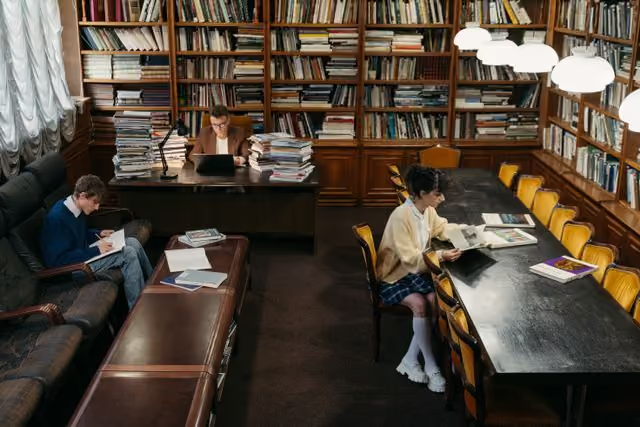
Since its founding in 1895, the Swiss National Library has collected not only publications but also visual documents from and about Switzerland. Its catalogs and digital archives make it possible to trace sources, older publications, and original contexts. A feed shows us what is currently getting attention. A library helps us understand where something comes from.

Is there a person, editorial team, institution, or organization that is responsible and reachable?
Are original documents, data, photographers, or other verifiable sources cited?
Are the methodology, selection process, and potential uncertainties transparent?
Do multiple independent sources report on the same event?
Trustworthy sources correct errors in a transparent way rather than letting them disappear silently.
Is the information dated, verifiable, and documented in its original context?

Look not for the account that shared the image most recently, but for the earliest publication you can find.
Who is shown? When and where was the image taken? Who took it?
Is there a website, a legal notice, an editorial team, or a collection where the image is documented?
Ten accounts copying from each other do not count as ten different sources.
Newspaper archives, image collections, and library catalogs help you find previous publications and original contexts.
Is the image real? Is the caption accurate? Is the story it tells complete? A real image can be mislabeled. An AI-generated image can be used transparently as an illustration. And an accurate caption can still omit important context.